
Helping your child settle into care without the tears at drop-off
By Marcus Beck · Updated 2026-07-21
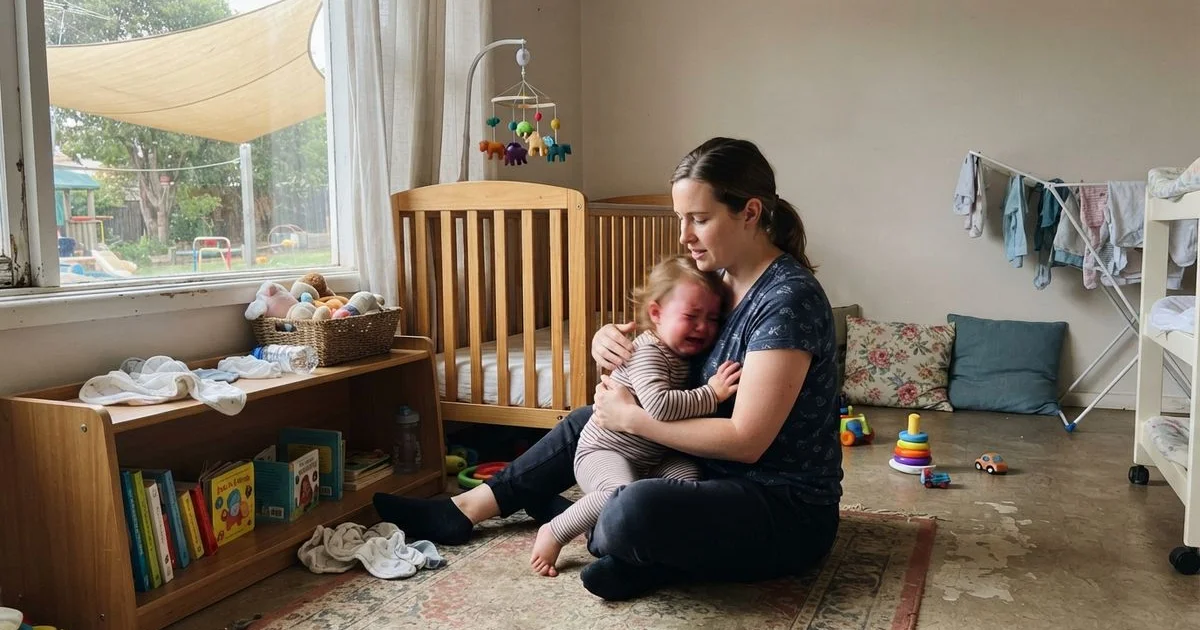
The tears at drop-off are often harder on the parent than the child, and for a lot of Gold Coast families, the guilt of walking away from a crying toddler is the part nobody warns you about. Here’s what actually helps, and how to tell ordinary settling-in from something worth flagging.
Why the goodbye is the hardest part
Young children don’t yet have a reliable sense that a parent leaving means a parent coming back. That uncertainty, not the centre itself, is usually what’s driving the tears. It’s also common for a child who was completely fine yesterday to suddenly struggle today, since separation anxiety often comes in waves rather than a steady decline.
What tends to help
| Strategy | Why it works |
|---|---|
| Keep the goodbye short and consistent | A predictable, brief goodbye is easier for a child to process than a drawn-out one |
| Use the same phrase or routine every day | Predictability builds trust that you’ll return, even before language fully develops |
| Avoid sneaking out | Leaving without saying goodbye can undermine trust once your child notices you’re gone |
| Bring a comfort item | A familiar object bridges the gap between home and the new environment |
| Stay calm yourself | Children pick up on a parent’s own anxiety at drop-off more than most parents realise |
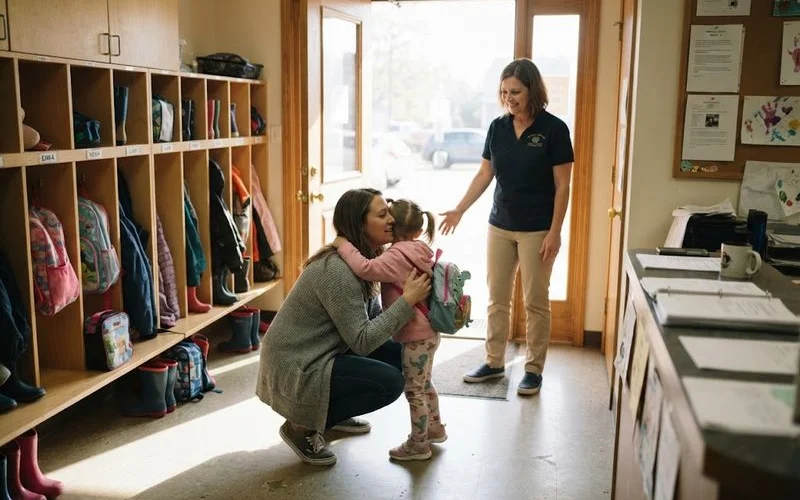
What a good educator does on the other side of that goodbye
A well-run room will usually redirect a distressed child into an activity within a few minutes of you leaving, rather than leaving them to cry it out alone. Ask your educator what they typically do in that window, since a specific, confident answer is a good sign, and a vague one is worth following up on.
Normal settling-in versus something to raise
Most children settle within a few days to a few weeks, and short-lived tears at the actual goodbye, even for months, can be completely normal as long as your child calms down soon after and engages with the day. What’s worth raising directly with the room leader is distress that continues for hours, a child who stops eating or sleeping at the centre, or clear regression at home (sleep, toileting, mood) that doesn’t ease after two or three weeks. A good service will work through adjustments with you rather than treating it as something to just push through.
Why Mondays and post-holiday returns are often harder
Even once a child has settled in, drop-offs can get harder again after a long weekend, school holidays, or any stretch of days at home. This is a genuinely common pattern rather than a sign of regression, since children readjust to a routine each time there’s a gap in it, the same way adults can feel reluctant to go back to work after a break. Building in a slightly earlier, calmer morning on these days, rather than rushing straight from a lie-in to a drop-off, tends to make the transition smoother.
If you have more than one child settling in at once
Starting two children into care around the same time, whether that’s a sibling pair or twins, adds its own pressure, since you’re managing two different settling-in timelines and two different reactions on the same morning. It can help to stagger start dates by a week or two if the centre allows it, so you can focus fully on one child’s first days before the next begins, rather than splitting your attention between two unsettled goodbyes at once.
Looking after yourself through it too
It’s easy to internalise a hard drop-off as a sign you’ve made the wrong choice, but a difficult few weeks of settling in doesn’t necessarily reflect on the quality of the centre or your parenting. Give it a genuine trial period, stay in touch with the educators about what they’re observing once you’re gone, and trust a consistent pattern over any single hard morning. If you’re easing back into work at the same time, our guide on returning to work after parental leave covers how to manage both transitions together.
If you’re still deciding on a provider, our methodology explains how we score Gold Coast services on communication and consistency, both of which matter enormously during this stage. Start from the Gold Coast Child Care Guide home page to compare rated options.
Common questions
- Is it normal for my child to cry at drop-off every day?
- Some children cry at the goodbye but settle within minutes once you've left, which is common and not usually a cause for concern. If the distress lasts most of the session or gets worse over weeks rather than easing, raise it with the room leader.
- Should I stay longer if my child is upset when I try to leave?
- Generally no. A longer goodbye tends to prolong the distress rather than ease it. A short, warm, consistent goodbye is what most educators recommend, even though it feels counterintuitive in the moment.
- How do I know if my child is happy once I've left?
- Ask for a specific update at pickup, not just how the day was, but what your child ate, whether they napped, and a moment from their day. Specific answers are a good sign the educators are genuinely tuned in.
- Is it my fault if my child struggles to settle?
- No. Settling in is about temperament, routine, and time, not about how prepared or capable you are as a parent. Plenty of confident, well-prepared children still take weeks to feel at home in a new place.