
Illness and hygiene in child care: what's normal and when to worry
By Marcus Beck · Updated 2026-07-25
This is general information, not medical advice. If you’re concerned about your child’s health or how often they’re getting sick, speak with your GP or a child health nurse.
Frequent illness is one of the most common surprises for families starting group child care on the Gold Coast, and it can feel like something is wrong even when it’s a normal, temporary part of building immunity. Here’s what’s typical, what good hygiene practice looks like at a centre, and what’s actually worth flagging.
Why the first few months are often the worst
A child starting long day care, family day care, or kindergarten for the first time is suddenly exposed to a much wider range of common viruses than they encountered at home, and their immune system hasn’t built up resistance to most of them yet. This is why the first three to six months of group care are often the peak period for colds, gastro, and other common illnesses, and why it tends to ease noticeably after that window as immunity builds.
What good hygiene practice looks like at a centre
| Area | What to look for |
|---|---|
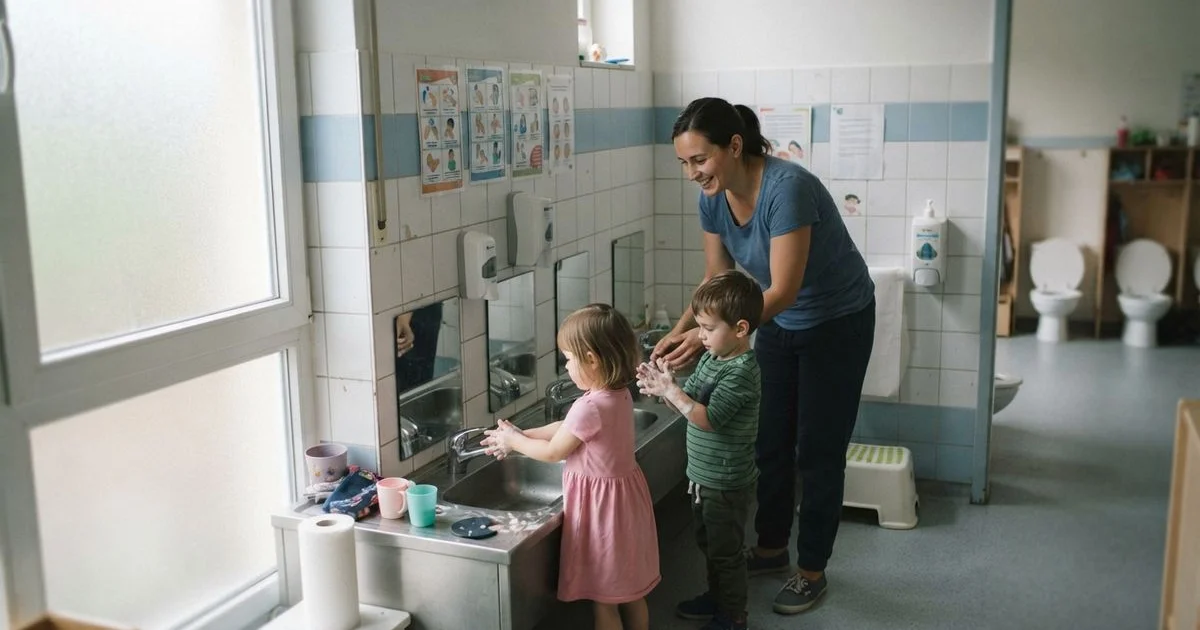
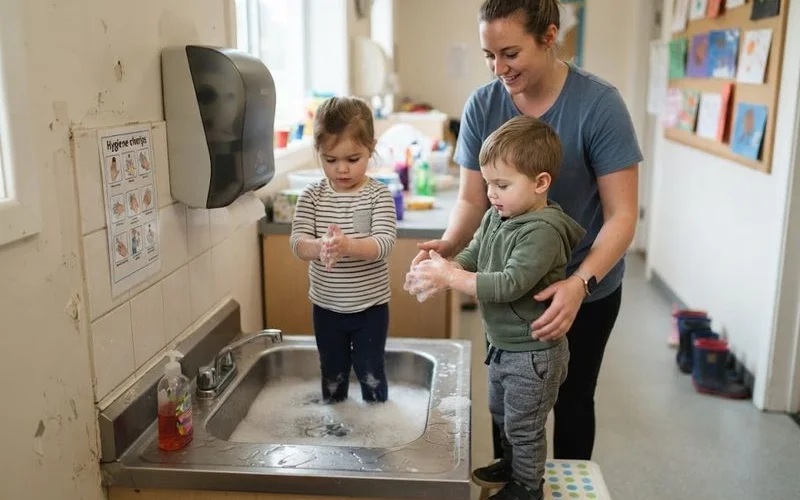
| Hand hygiene | Structured hand-washing before meals, after outdoor play, and after nappy changes |
| Nappy change areas | Separate from food preparation and eating areas, with a clear cleaning routine between children |
| Exclusion policy | A clear, written policy for fever, vomiting, diarrhoea, and contagious conditions, applied consistently |
| Toy and surface cleaning | A regular cleaning routine, especially for toys shared by babies and toddlers who mouth objects |
| Illness communication | Prompt notification to parents if there’s a confirmed case of something contagious in the room |
Asking about it without feeling awkward
It’s completely reasonable to ask a centre director directly what their hand hygiene and cleaning routine actually looks like day to day, and what their exclusion policy is for common illnesses. A service confident in its practices will describe specifics, before meals, after outdoor play, during nappy changes, rather than a general “we’re very clean” answer.
When frequent illness is worth raising
Some illness in the first few months is expected, but it’s worth mentioning to your GP or child health nurse if your child is getting sick unusually often even well past the initial adjustment period, if illnesses seem more severe than typical for their age, or if you’re noticing a pattern that doesn’t fit the usual settling-in curve. This is a conversation for a health professional rather than the centre itself, though it’s still worth asking the centre whether other families in the room have reported something similar, since a cluster of cases points to something circulating rather than an individual issue.
Seasonal patterns worth knowing about
Illness tends to cluster around certain times of year, more colds and respiratory bugs through the cooler months, more gastro-type illness during the wetter, humid stretches. This isn’t specific to any one centre, it’s a broad pattern across group care generally, so a run of sick days during these periods isn’t necessarily a reflection of how well a service manages hygiene. What matters more is whether the centre communicates clearly when something is going around and follows its own exclusion policy consistently, rather than whether illness happens at all.
Balancing exclusion policies with your own work
A strict, consistently applied exclusion policy protects every child in the room, including yours, even though it can be frustrating when it means an unexpected day off work. Having a backup care plan ready for these days, a partner, family member, or a casual carer, takes some of the pressure off having to choose between your child’s health and your job on short notice.
Our methodology explains how we factor health, safety, and hygiene themes from parent feedback into how we score Gold Coast providers. Start from the Gold Coast Child Care Guide home page to compare rated options.
Common questions
- Is it normal for my child to get sick constantly in their first few months of care?
- Yes, this is extremely common. Young children in group care for the first time are exposed to far more common viruses than they were at home, and their immune systems are still building resistance to them.
- How do I know if a centre's exclusion policy is reasonable?
- A clear, written policy covering fever, vomiting, diarrhoea, and contagious conditions, applied consistently to every family, is a good sign. Be cautious of a service that seems to apply exclusion rules inconsistently or reluctantly.
- Should I ask about hand hygiene and cleaning routines directly?
- Yes. It's a completely reasonable question to ask on a tour, and a service with a genuine routine (before meals, after outdoor play, nappy changes) will usually answer specifically rather than vaguely.
- When should I get medical advice rather than just monitoring at home?
- If illness is unusually frequent, severe, or your child isn't following the typical settling-in pattern of improvement over several months, talk to your GP or child health nurse rather than assuming it's just normal exposure.